Whether you’re already moving household items on one marketplace or just entering the category, picking the right sales channel is key to scaling. Some platforms are built for everyday essentials, others reward visual-first products or flexible pricing strategies.
In this guide, we break down the top 5 U.S. marketplaces where household products actually sell – and where sellers get the most value. You’ll see what makes each platform a fit, what it takes to start selling, and how to match your catalog to the right audience.
What Falls Under “Household Items”?
Household items cover a wide range of functional and decorative products used for daily living, cleaning, and organizing spaces. Most marketplaces group them under similar core categories:
- Home & Kitchen – cookware, tableware, storage containers, countertop appliances, prep tools
- Cleaning Supplies – mops, brooms, sponges, sprays, disinfectants, scrub brushes
- Storage & Organization – bins, baskets, drawer dividers, closet systems, under-bed storage
- Laundry & Utility – hampers, drying racks, ironing boards, step stools
- Home Décor – wall art, mirrors, clocks, candles, small decorative accents
- Furniture (compact/flat-pack) – side tables, shelves, compact chairs, storage cubes
- Lighting – LED strips, table lamps, motion lights, nightlights
- Bathroom Essentials – caddies, soap dispensers, toilet brushes, shower curtains
- Entryway & Garage – hooks, wall-mounted organizers, doormats, shoe racks
- Smart Home Accessories – plug timers, remote-controlled lighting, sensor-based devices
These categories may vary by platform taxonomy, but the logic is consistent: household items are problem-solving products for the home. They’re functional, frequently replenished, and often tied to lifestyle upgrades or seasonal use.
Walmart Marketplace
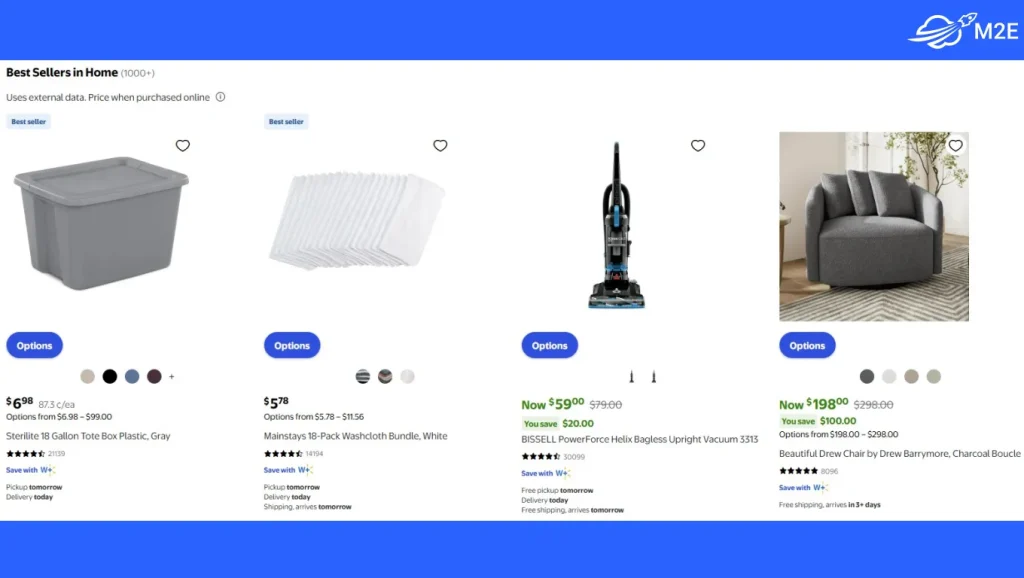
Walmart is one of the top destinations for household items in the U.S. The platform is built around everyday essentials, which makes it a natural fit for sellers of high-demand, practical home products.
Why It Works for Household Sellers
Top-performing categories include Home & Kitchen, Household Essentials, Storage & Organization, and Home Decor & Furniture. These cover everything from cookware, cleaning tools, and small appliances to bins, organizers, and seasonal decor. Walmart customers actively look for value packs, affordable prices, and reliable shipping. Products tied to seasonal use (like back-to-school or holiday prep) often see strong traction.
Walmart’s reputation for household staples means buyers come ready to purchase. Sellers that price competitively and use WFS (Walmart Fulfillment Services) often outperform. WFS handles national delivery, even for bulky items like storage bins or multi-piece organizer sets, and provides consistent SLAs. If your supply chain is lean and your product data clean, Walmart can move serious volume.
What You Need to Sell on Walmart Household Items
To sell on Walmart Marketplace, you must meet these requirements:
- U.S.-registered business with a valid EIN
- U.S.-based customer support (phone & return address)
- Business bank account in the U.S.
- Ready-to-ship inventory and defined shipping policy
- Return policy that meets Walmart standards
The onboarding process involves submitting an application, providing business documentation, passing a compliance review, and signing the retailer agreement. Once approved, sellers gain access to the Walmart Seller Center to manage products and fulfillment.
Walmart expects sellers to meet performance standards, including on-time shipping, valid tracking uploads, and low cancellation rates. Maintaining high customer satisfaction and responsive support is key to account health. Sellers must also comply with Walmart’s product content guidelines and restricted product policies.
Seller Plan and Fees
Walmart keeps things simple: there’s no monthly subscription fee to sell. All approved sellers are on the same standard plan.
- Referral fees: 6%–15% based on category (15% for most household goods)
- WFS (optional): Storage and fulfillment start around $3.45 per unit, but vary by size and weight. Small items stay in the lower range, while bulky goods cost more to ship and store.
Fulfillment Options
Sellers can fulfill orders themselves or use Walmart Fulfillment Services (WFS).
- WFS offers 2-day delivery, national coverage, and placement boosts.
- Seller-fulfilled orders must meet performance standards for speed and accuracy.
Walmart also offers features like in-store returns and BOPIS (Buy Online, Pick Up In Store), but they aren’t available to every seller by default. These services are most commonly enabled for WFS users, select sellers, or specific product categories. If you’re set up with WFS and meet Walmart’s eligibility criteria, these options can help improve customer satisfaction and boost conversion.
Amazon

Amazon dominates U.S. online retail and remains a go-to channel for household items like kitchen tools, organizers, small appliances, and lighting. It’s the most trusted platform for buyers – and the most competitive for sellers. Despite the pressure, sellers still enter this space because buyers convert, search volume is huge, and Amazon’s trust factor drives repeat business. If your product is functional, mass-market, and price-sensitive, Amazon is a strong fit.
Why It Works for Household Sellers
Amazon’s search-first structure rewards listings that are complete, keyword-rich, and conversion-optimized. For household sellers, this means fast-moving SKUs can gain traction quickly – especially if you bundle, run ads. Many household categories benefit from repeat purchases and bulk orders, and Amazon’s infrastructure supports both.
Buyers are used to comparing similar products side by side. Strong visuals, reviews, and optimized titles matter. If you get it right, Amazon delivers unmatched volume and visibility.
But it’s not for every business. If your margins are razor-thin, your product is fragile or high-risk for returns, or you can’t stand out from similar listings, you’ll face an uphill battle. Still, for sellers with the right product mix and pricing strategy, the upside is unmatched.
What You Need to Sell on Amazon Household Items
You’ll need a registered Amazon account, business details (legal name, tax ID), and product listings ready to go. Amazon requires identity and tax verification and may ask for video confirmation. Once you’re in, the rules are strict:
- Order Defect Rate under 1%
- Late Shipment Rate below 4%
- Valid Tracking Rate above 95%
You’re also responsible for setting up your sales tax settings properly. Amazon may collect and remit sales tax for you, but you’re still on the hook for ensuring compliance in your account settings.
Seller Plan and Fees
Amazon offers two plans for sellers, depending on how many products you list and how often you sell.
- Professional plan: $39.99/month flat fee, plus standard referral fees. You get access to advanced tools, bulk listing, Amazon Ads, and eligibility for the Buy Box.
- Referral fee for household goods is typically 15%. FBA fees vary by size and weight.
Fulfillment Options
- Fulfilled by Amazon (FBA). You send your inventory to Amazon’s warehouse, and they take care of the rest – storing, packing, shipping, customer support, and even returns. Your listings get the Prime badge, which is a huge trust signal and boosts conversion. It’s ideal if you want to scale and don’t want to build your own logistics infrastructure.
- If you sell on multiple channels, you can also use Amazon’s Multi-Channel Fulfillment (MCF) to ship non-Amazon orders using your FBA inventory. It’s a way to centralize fulfillment and still meet SLA expectations on platforms like eBay, Walmart, or your own store – though MCF comes with separate fees and some branding limitations.
- Fulfilled by Merchant (FBM). You keep products in your own warehouse or with a third-party provider and handle everything yourself – shipping, service, returns. This model gives you more control over packaging and margins but requires strict adherence to Amazon’s performance standards (delivery speed, tracking, defect rate). Best for sellers with an existing logistics setup or specialized fulfillment needs.
eBay

eBay is a strong fit for household sellers with flexible or non-standard inventory. It’s especially effective for refurbished, used, open-box, clearance, or slow-moving items. Household SKUs like surplus kitchenware, one-off lighting units, or seasonal storage products can move well with the right pricing and positioning.
Why It Works for Household Sellers
eBay buyers are deal-driven and more open to unique or value-priced listings. That gives sellers more room to experiment with bundles, secondhand units, or price testing. You can sell the same category of household items in multiple formats – new, open-box, refurbished – without facing listing restrictions.
The platform also supports more niche subcategories and one-off variants that might get suppressed or flagged on stricter marketplaces like Amazon. If you have diverse household inventory or want to squeeze margin from aging stock, eBay gives you the runway.
What You Need to Sell Household Items on eBay
Getting started on eBay is straightforward. Here’s what you’ll need:
- A business or personal eBay account
- Verified bank account or Payoneer for payouts
- Basic product info, pricing, and shipping setup
- Defined return policy and handling time
Apply directly at the seller center. eBay doesn’t gate most household categories, so you can usually start listing within a day or two.
To maintain good standing, eBay sellers must provide accurate listings, ship on time, upload tracking, and handle returns promptly. eBay evaluates sellers based on metrics like “Late shipment rate” and “Cases closed without seller resolution.” Top Rated Seller status offers benefits for consistently high performance.
Seller Plan and Fees
eBay offers several store plans depending on your sales volume. If you’re serious about scaling, go beyond the basic tier to access lower final value fees and more free listings. eBay business pricing includes monthly store subscriptions. Starter Store starts from $4.95/month is enough. For scaling, higher-tier plans unlock more free listings and lower final value fees (FVFs).
- Final value fees typically range from 6.9% to 13.6%, depending on the product category, store tier, and whether you use eBay’s managed payments system.
- On top of that, there’s a $0.30 order fee per transaction – not a processing fee in the traditional sense, but charged per completed sale.
- You only pay when you sell – there’s no listing fee for most categories unless you exceed your monthly limit.
Fulfillment Options
eBay doesn’t have a built-in fulfillment program like Amazon FBA or Walmart WFS. Sellers handle shipping themselves or work with a third-party logistics provider (3PL). You can access discounted labels through USPS, UPS, and FedEx directly in your seller hub.
To stay competitive:
- Offer fast handling, ideally same or next day
- Always upload valid tracking on time
- Eligible sellers may qualify for eBay’s Guaranteed Delivery badge, but it’s not automatic – it depends on your seller history and how consistently you meet shipping and handling targets
Temu
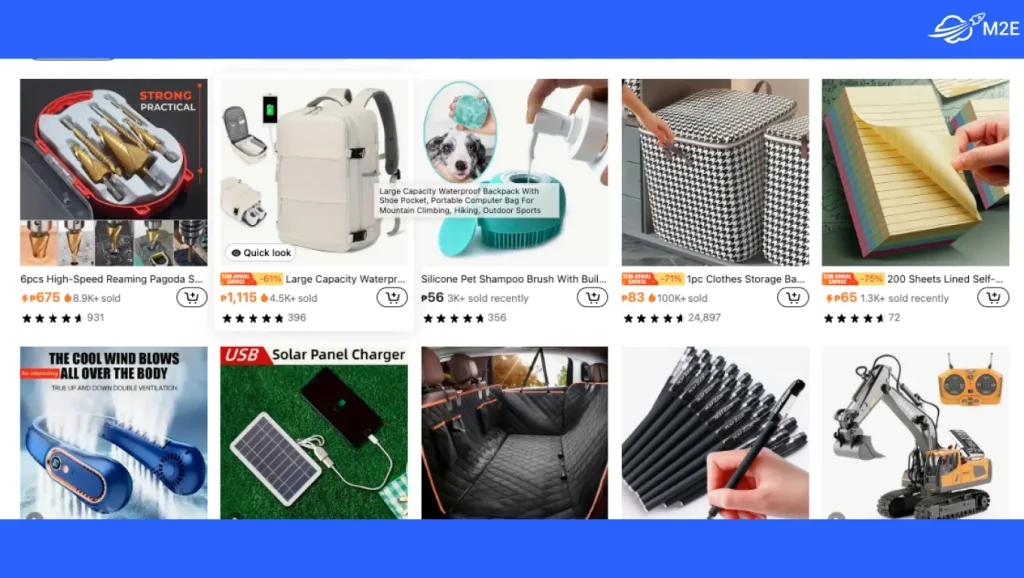
Temu is scaling fast in the U.S. and has become a key destination for household goods priced for value-conscious shoppers. From kitchen accessories to small appliances and hygiene products, Temu’s catalog leans heavily on practical, everyday-use household items that move in high volumes.
Why It Works for Household Sellers
There are no strict limits on what you can sell. Household essentials, appliances, home accessories, hygiene goods – all are welcome. This open structure makes Temu a flexible sales channel for businesses with diverse catalogs. Temu’s buyer base is highly engaged and price-aware, which makes the platform ideal for household brands that offer solid value. Sellers benefit from exposure to a wide audience and the ability to launch or test products in a low-risk environment.
What You Need to Sell Household Items on Temu
One of Temu’s key strengths is how easy it is to get started. The registration process is simple, fast, and optimized to lower barriers:
- Register a seller account through Temu’s supplier portal
- Submit basic business documentation
- Complete a short approval process
Sellers are expected to maintain delivery reliability, provide valid tracking, and adhere to Temu’s quality control standards. Product descriptions must match delivered items, and customer service responsiveness is monitored. Temu reserves the right to delist products or pause accounts based on performance.
Seller Plan and Fees
- Temu does not charge a monthly subscription fee. Sellers join under a standard agreement
- Commissions vary by product category
- There are no listing fees, and support is available for order management and customer service.
Fulfillment Options
Temu supports multiple fulfillment paths:
- Sellers can ship inventory to Temu-affiliated warehouses
- U.S.-based sellers may fulfill domestically with valid tracking and delivery compliance
The platform’s operational model helps reduce setup and ongoing logistics costs. Sellers focused on efficiency and value-driven positioning often find Temu a strategic fit for household products.
TikTok Shop

TikTok Shop is becoming popular for household items that work well in short videos, such as kitchen tools or storage solutions. It opens up a unique opportunity for sellers of household products that solve real-life problems and demonstrate well on camera.
Why It Works for Household Sellers
TikTok Shop gives household sellers a unique edge through its content-driven model. The platform is ideal for functional, demo-friendly products – like collapsible bins, space-saving organizers, or smart kitchen tools – that can capture attention in a 15-second video. High engagement rates (likes, shares, comments) feed the algorithm and can drive rapid sales without paid ads. Sellers can also tap into TikTok’s creator economy by partnering with influencers who showcase products in real-life settings, helping boost credibility and conversion.
However, TikTok Shop isn’t right for every household item. If your product is bulky, fragile, hard to demonstrate, or lacks visual appeal, it may struggle to perform. The same goes for sellers who don’t have time or resources to create content – without strong video, even great products can get buried.
What You Need to Sell Household Items on TikTok Shop
To onboard, you need:
- A registered business or approved individual seller account
- Valid government-issued ID
- Product listings and fulfillment details
- Compliance with TikTok Shop seller policies
Sellers apply, complete identity verification, and accept marketplace terms.
TikTok Shop evaluates sellers based on fulfillment accuracy, shipping time, return handling, and order cancellation rates. Sellers must maintain a trustworthy brand image, comply with content and advertising rules, and stay responsive to customer queries. High-performing accounts may qualify for platform incentives and better exposure.
Seller Plan and Fees
There’s no monthly fee to use TikTok Shop. Commissions hover around 9% of the total order value (item price + shipping + discounts), depending on category and region. The cost model is performance-based. You pay only when a transaction occurs.
Fulfillment Options
You can fulfill in two ways:
- Fulfilled by TikTok (FBT). TikTok stores and ships your products from their U.S. warehouse network. This includes fast shipping, tracking, and support.
- Fulfilled by Seller. You manage fulfillment directly. TikTok expects reliable delivery times and order tracking.
Fast delivery improves algorithmic placement, so many household sellers opt for FBT to reduce friction and improve conversion. If your product is visually compelling and lightweight, TikTok Shop gives you access to a highly engaged, discovery-driven customer base.
Manage Household Product Sales Across Marketplaces with M2E Cloud
Selling household goods is a volume game. You’re juggling repeat-purchase items, bundles, and seasonal demand under tight margins and strict fulfillment expectations. Once you expand beyond a single marketplace, even small inconsistencies turn into real problems – inventory gaps, overselling, listing errors, and fragmented order workflows.
That’s where M2E Cloud comes in. It centralizes your product catalog, listings, inventory, pricing, and orders in one system, keeping your operations aligned across Amazon, Walmart, eBay, Temu and TikTok Shop without adding operational overhead.
- Cleaner listings with fewer failures. Each marketplace enforces its own category rules, image specs, and required fields. M2E Listing Assistant helps you build listings that match each platform’s format and flags errors before submission.
- Inventory sync across all channels. Household goods often include bundles, seasonal variants, or bestsellers in different pack sizes. M2E keeps inventory accurate across all platforms, so what sells on Walmart disappears from your stock on eBay or Amazon.
- One order flow with auto-sync. All marketplace orders land in one queue. When you fulfill an order, M2E syncs the tracking number and shipping status back to the correct channel – no manual copy-paste.
- One-click pricing updates. Need to adjust prices for a flash sale or respond to a seasonal trend? Update once and push it across all channels at once. No tab-hopping or duplication.
- Workflows you can reuse. As you expand, you don’t rebuild from scratch. M2E reuses your listing templates, product mappings, and pricing logic so you can add channels without multiplying your workload.
- Support when it matters. From marketplace onboarding to category-specific listing fixes and bundle setup, M2E’s team supports household sellers across all connected channels, helping resolve issues that slow launches or block listings.
M2E Cloud is how household sellers scale without chaos. You keep control while growing volume.

Conclusion
Each marketplace has its strengths when it comes to selling household items, but the best one for your business depends on what you’re selling, how you fulfill, and how much control you want over operations.
- Amazon is one of the strongest channels for selling household items in the U.S. Buyers trust the platform, search demand is high, and everyday essentials, bundles, and Prime-eligible products convert well. If your product is practical and priced competitively, Amazon can generate large, predictable sales volume. The challenge is cost. Competition is intense, and fulfillment fees rise quickly if packaging is bulky or inventory sells slowly. Sellers who keep packaging compact and inventory moving pay lower fees and keep more money from each sale.
If you already use FBA, Amazon can also support a multichannel setup. Amazon Multi-Channel Fulfillment (MCF) lets you ship orders from other marketplaces using your existing FBA stock, helping you expand without setting up separate fulfillment right away.
- Walmart gives you access to value-driven shoppers and fulfillment through WFS. It’s strong for scalable, practical SKUs and stable logistics. Sellers with fragile supply chains or limited U.S. presence may find it harder to keep up.
- eBay is flexible and seller-friendly, ideal for unique, refurbished, or seasonal household items where pricing and bundling strategies vary. It’s less rigid, but visibility can depend on seller history and ratings.
- Temu lowers the barrier to entry with free setup and access to a large, price-sensitive audience. It’s great for sellers with lean operations and scalable logistics, especially if you want a low-risk test of new products.
- TikTok Shop thrives on attention. It works best for visual, demo-ready items like space-saving organizers, kitchen tools, or smart gadgets. Without content, there’s no traction. It’s not the right channel for bulky or fragile products, or sellers who can’t produce creativity consistently.
Whichever marketplace you focus on, M2E Cloud helps you manage multichannel selling with fewer manual steps. Listings, inventory, pricing, and orders stay aligned, so when you expand, you don’t create more overhead – just more sales.