Selling clothes on eBay can be a strong growth channel for US business sellers, especially if you sell new apparel and already manage inventory through Shopify, BigCommerce, WooCommerce, or another ecommerce platform.
The demand is there. In Q1 2026, eBay reported 136 million active buyers and $11.5B in US GMV. But clothing isn’t an easy category to win. Many sellers offer similar products, prices change fast, and fees can cut into margins.
To sell clothing on eBay successfully, good products aren’t enough. Sellers also need strong listings, clean variation data, synced inventory, fast shipping, and a return process that does not slow down operations.
Main eBay Clothing Categories for Business Sellers
Let’s start with the basics.
eBay clothing isn’t one simple category. A dress, a work shirt, and a kids’ multipack all behave differently in search. Each group has its own competition, return risk, sizing issues, and margin pressure.
For larger sellers, category planning should come before listing at scale.
- Clothing, Shoes & Accessories. The main category for fashion products on eBay. Sellers use it to map apparel, footwear, bags, accessories, and related items.
- Men’s Clothing. Shirts, jeans, jackets, underwear, workwear, activewear, and basics often work well when the catalog is repeatable, and stock is stable. Buyers usually search by size, fit, color, material, and brand.
- Women’s Clothing. Dresses, tops, jeans, maternity, plus-size, activewear, and seasonal apparel can bring strong demand. They also bring more competition, especially when many listings look alike.
- Kids & Baby. Baby clothes, schoolwear, basics, seasonal items, and multipacks are often driven by repeat need. Parents look for practical items at fair prices, so bundles can help raise order value.
- Athletic Apparel. Gym wear, running gear, sportswear, athleisure, and branded activewear depend on clear product details. Buyers care about fabric, fit, activity type, and brand.
- Specialty Clothing. Uniforms, workwear, protective clothing, costumes, vintage-style items, and niche apparel often attract buyers with a clear purpose. That can make them less price-driven than broad categories like T-shirts or dresses.
One listing approach won’t work for every clothing category. Larger sellers need to map categories, variations, prices, and stock around how buyers actually search.
💡 How M2E helps: M2E makes listing easier by connecting your online store to eBay. Sellers can use the product data they already have instead of creating each listing from scratch. Titles, prices, stock levels, variations, and attributes can sync automatically. For large fashion catalogs, this means less manual work and fewer listing errors.


High-competition categories: Where it is hardest to win
Some clothing categories on eBay are harder to scale because many sellers offer similar products. Buyers can quickly compare prices, shipping speed, photos, and seller ratings.
The hardest categories usually include:
- Women’s dresses. High demand, but many similar listings. Returns can also be higher because buyers care about fit, length, fabric, and occasion. Sellers need strong photos, accurate sizing, and clear return handling.
- T-shirts. Easy to list, but hard to stand out. Many sellers compete on the same basics, designs, and price points. Bundles, branded designs, niche audiences, and low shipping costs can help.
- Sneakers. Strong demand, but also strong competition. Buyers often compare by brand, condition, authenticity, price, and delivery speed. Sellers need reliable brand access, competitive pricing, and fast fulfillment.
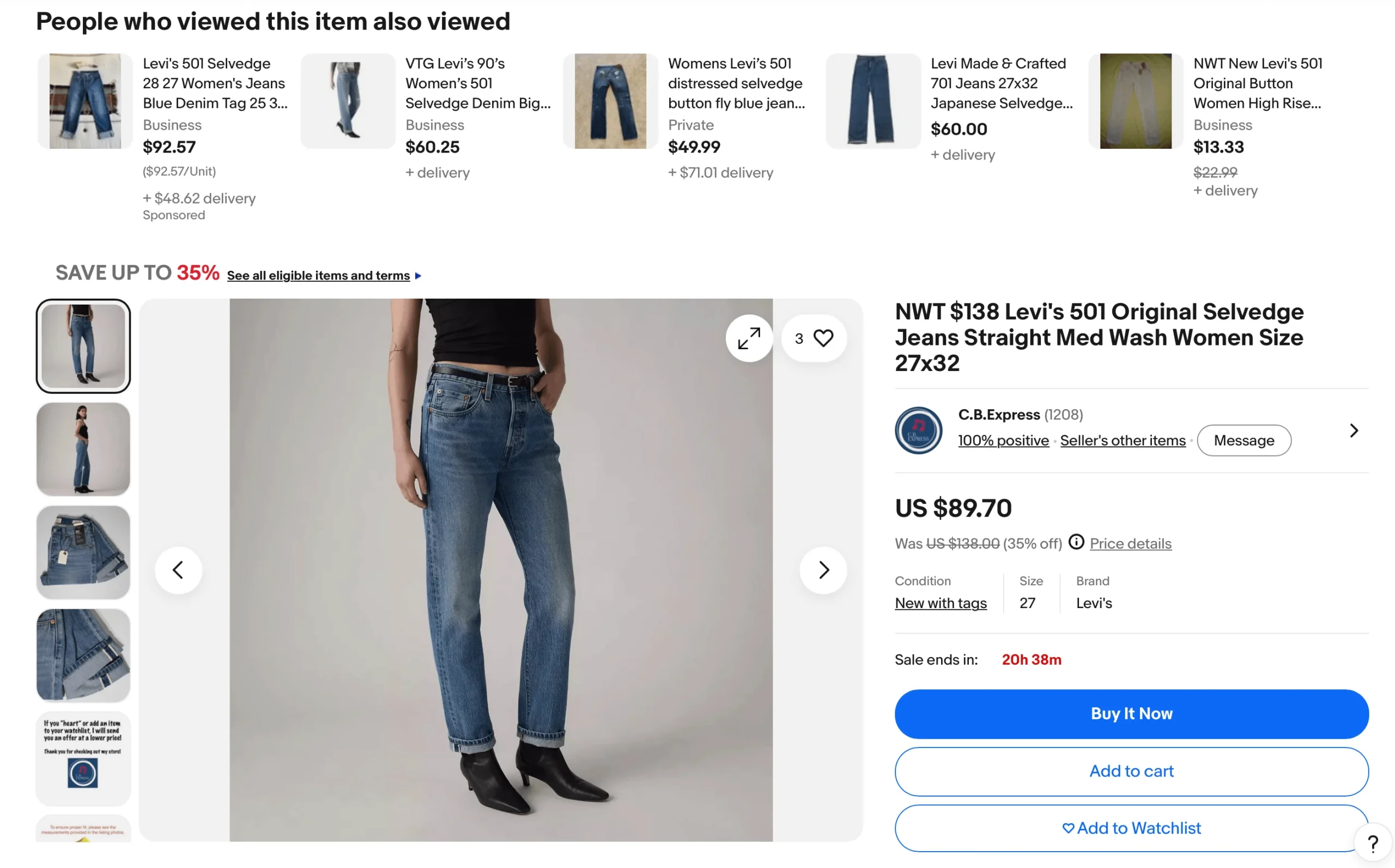
- Jeans. Fit is the main issue. Buyers care about waist, inseam, rise, stretch, cut, and fabric. Clear item specifics, detailed sizing, and good photos can reduce returns.
These categories can still work, but sellers need a clear advantage. That may be better wholesale pricing, brand access, strong photos, fast shipping, bulk inventory, or the ability to run promotions without losing margin.
Sizing and variation management also matter. If buyers cannot find the right size, color, or fit, they will move to another listing.

Lower-competition clothing opportunities on eBay
High-competition categories aren’t the only path. Many sellers have a better chance in smaller segments where buyers search with a clear need. These products often face less price pressure and can be easier to scale.
Good opportunities include:
- Niche sizing. Plus size, maternity, tall, petite, extended sizes, and wide shoes can work well. Buyers in these segments often know exactly what they need, so they compare fewer random listings.
- Workwear and uniforms. Scrubs, safety clothing, work pants, hi-vis jackets, chef uniforms, and industrial apparel are practical products. Demand is less trend-driven because buyers often need them for work.
- Bundles and multi-packs. 3-pack T-shirts, underwear, socks, kids’ basics, and gym tops can raise order value. They also make low-priced items more profitable after fees and shipping.
- Seasonal clothing. Jackets, swimwear, thermal underwear, rainwear, school clothing, and holiday apparel sell best when demand is time-sensitive. Good timing can help sellers move stock faster.
- Less saturated brands. Sellers don’t always need the biggest brands. Smaller brands can work when demand is clear and direct competition is lower.
💡 Tip from M2E: Begin with categories where competition is lower. Niche sizing, workwear, bundles, and seasonal products can help you learn what sells on eBay and build a buyer base. After that, it is safer to test crowded categories such as dresses, T-shirts, jeans, or sneakers.
eBay Selling Fees: How to Plan Your Margin
Clothing margins can look healthy until fees, shipping, and returns are added. That is why sellers should plan costs before they set prices.
eBay fees depend on the category, seller type, Store subscription, listing format, item price, and optional services. For many apparel sellers, the final value fee is often in the low-to-mid teens, but the exact rate can change.
Costs to plan for include:
- Final value fees: often around 12%-14% for many apparel-related listings.
- Per-order fee: added to many orders, depending on order value.
- Insertion fees: may apply after your free listing allowance.
- Store subscription: can lower some fees and increase free listings.
- Promoted Listings or ads: often needed in crowded categories.
For example, a $30 multipack of shirts may seem profitable. But after product cost, eBay fees, shipping, packaging, ads, and possible returns, the real margin may be much lower.
💡 Tip from M2E: For larger sellers, pricing should include all selling costs from the start. We’ve prepared a guide on eBay fees and commissions to help you understand how to calculate your margin. Feel free to check it.
Tips to Sell Clothes Faster on eBay
Fast sales on eBay come from more than demand. Buyers need to find your listing, trust the product, and see a clear reason to buy from you instead of another seller.
Price competitively from the start
Check similar sold listings before setting prices. Don’t price only from your target margin. Include product cost, eBay fees, shipping, packaging, returns, and ad costs.
💡 How M2E helps: M2E Selling Policies let sellers set price sources and apply price changes by product group. This helps teams manage basics, premium items, and clearance stock without manual repricing.
Use searchable titles
A strong title should tell buyers exactly what the item is. Use the details they most often search for.
A simple structure works well: Brand + Product Type + Gender + Size + Color + Key Feature
💡 How M2E helps: M2E lets sellers set the source for product titles and descriptions when listing items on eBay. You can also manage title and description sync through Description and Synchronization Policies, which helps keep listing data controlled across a large catalog.

Fill in item specifics
Clothing buyers often filter by size, brand, color, material, fit, style, and occasion. Missing item specifics can reduce visibility.
💡 How M2E helps: M2E Category Policies and Attribute Mapping help sellers match store attributes to eBay-required item specifics and reuse saved category settings across large catalogs.
For example, a dress listing can pull material from a store metafield and use a saved sleeve length value. That helps reduce manual work and keep item specifics consistent.
Use variation listings for size, color, and fit
Fashion products often have many variations. A single product may come in several sizes, colors, fits, or pack quantities. Separate listings can make the catalog harder to manage and harder for buyers to shop.
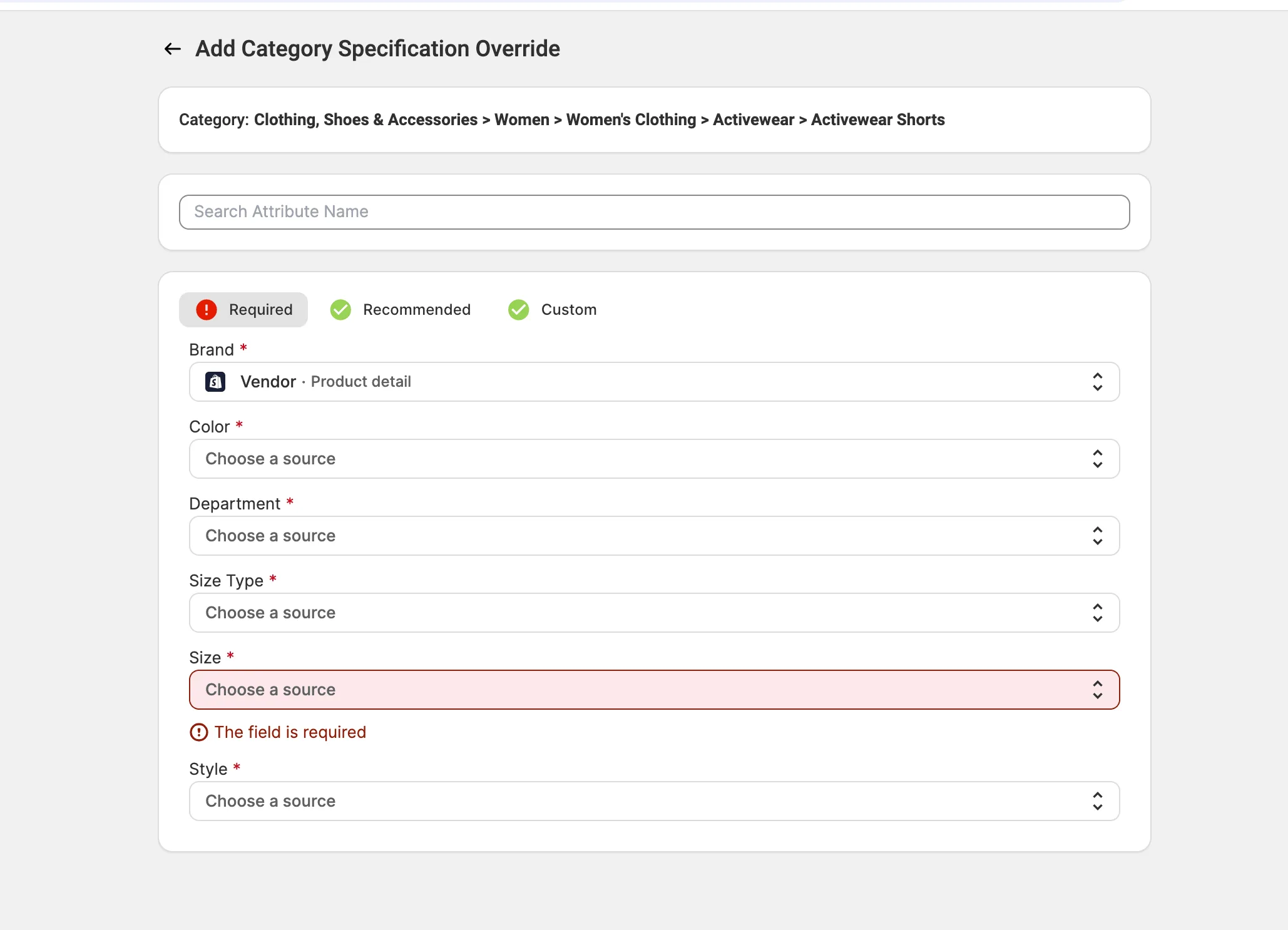
Some eBay apparel categories also require specific item details before a listing can be published. Depending on the product type, sellers may need to provide attributes such as brand, size, color, department, style, material, type, or size chart details. Missing required item specifics can reduce listing visibility or prevent products from being listed correctly.
💡 How M2E helps: M2E helps sellers manage product variations from store data and list them on eBay in a cleaner structure. This is useful for large apparel catalogs with many sizes and color options.
Use clean product photos
Photos help buyers check color, fabric, fit, labels, and packaging. Use a consistent image style across SKUs.
💡 How M2E helps: M2E can sync product images from your store to eBay, so teams do not need to upload photos manually for each listing.
Offer fast shipping and clear returns
Fast shipping helps listings compete. Clear returns build trust, especially for fit-sensitive products like dresses, jeans, and activewear.
💡 How M2E helps: M2E Shipping and Return Policies let sellers manage delivery and return settings for eBay listings in a structured way. Additionally, you can link Amazon MCF to fulfill orders even faster.

Use promotions with a margin plan
Promotions can help move stock faster, but they should not cut into profit unthinkingly. Check fees, shipping, returns, and product cost before discounting.
💡 How M2E helps: M2E lets sellers manage eBay discounts in bulk, including volume discounts, order size discounts, shipping discounts, and sale events.
Set up eBay Live for product discovery
eBay Live lets sellers showcase products through livestreams and interact with buyers in real time. It works best for new arrivals, limited stock, and seasonal items. It can help increase trust and conversion.
However, it requires time and consistency, so it works better as a supporting channel.
💡 How M2E helps: M2E keeps product data, pricing, and inventory accurate before and after live sessions, helping reduce overselling and maintain consistent listings.
Track what works
Fast selling isn’t only about listing more products. Sellers need to know which categories, brands, and SKUs actually perform.
Track what sells, what gets returned, and which listings need updates.
💡 How M2E helps: M2E Sales Analytics helps sellers track revenue, order count, average sale price, buyer trends, brand performance, category performance, and item-level results.

Selling Bulk Clothes Online: How to Scale on eBay
Selling bulk clothes online isn’t just about adding more listings. Large apparel catalogs need clean product data, accurate stock levels, clear pricing, and fast order processing.
- Use multi-variation listings. Apparel often comes in many sizes, colors, fits, and pack quantities. M2E helps map these variations from your store catalog to eBay, so sellers don’t need to create each option by hand.
- Create bundles and multipacks. 3-pack shirts, underwear multipacks, socks, kids’ basics, and seasonal sets can increase order value. M2E helps manage quantity and pricing rules for product groups.
- Keep SKU-level inventory accurate. One size or color can sell out faster than the rest. M2E syncs stock between your store and eBay, helping reduce overselling and cancellations.
- Update seasonal stock fast. Jackets, swimwear, schoolwear, and holiday items need quick updates. M2E helps sellers update prices, stock, listing data, and promotions in bulk.
Bulk selling works best when the catalog is controlled. The goal is to list, sync, price, and update products without adding more manual work.
Large apparel catalogs require clean and structured data. Manual setup can slow down operations and lead to errors.
M2E listing services help sellers:
- Organize product data for eBay requirements
- Map attributes and item specifics
- Create listings in bulk
- Align the catalog structure across channels
This is useful when launching new catalogs or scaling quickly.

Using Promotions to Move Clothing Inventory Faster
Promotions can help clothing sellers get more visibility and clear slow-moving stock. But discounts need a plan. Without margin control, they can reduce profit without improving sales.
High-competition products often need stronger promotion. Categories like T-shirts or dresses usually require higher rates to stay visible. Niche products, such as workwear or extended sizes, may perform with lower discounts.
With M2E, sellers can add products to eBay Discounts and Promoted Listings directly from their store. They don’t need to switch to eBay to manage promotions – everything can be handled in one place.
For example:
- T-shirts → higher promotion rate
- Dresses → medium rate
- Clearance items → aggressive discounts
M2E also supports rule-based automation. You can adjust promotion rates based on product type, price, brand, or inventory level. This helps react to slow-moving stock without manual updates.
To protect margins, promotion rules can be combined with pricing logic. This ensures discounts do not push products below a profitable level.
Before applying any promotion, always check:
- product cost
- eBay fees
- shipping and packaging
- returns
- ad spend
The goal is simple: move inventory faster without turning sales into losses.
💡 Want to go deeper? The M2E eBay webinar breaks down how to sell at scale.
You will learn:
- How to build and manage listings
- How to set pricing and promotion rules
- How to keep inventory in sync
- How to handle orders across channels
Pitfalls to Avoid When Selling Clothes on eBay
Before you start, make sure you have the basics ready:
- an eBay business account
- clear return policy
- shipping setup
- organized SKU structure
- high-quality product photos
- size charts for apparel items
- synced inventory across your store and eBay
Selling clothes on eBay can work well, but small mistakes can cut into profit fast. Larger sellers should watch for issues affecting visibility, stock, pricing, and fulfillment.
- Entering crowded categories without a clear advantage. Dresses, T-shirts, jeans, and sneakers are hard to sell if your products look like everyone else’s. You need at least one strong edge: better pricing, brand access, strong photos, fast shipping, bulk inventory, or well-planned promotions.
- Pricing without counting all costs. eBay fees are only one part of the total cost. Sellers also need to include shipping, packaging, returns, ads, and discounts. A product can sell often and still bring weak profit if the price is too tight.
- Using weak listing data. Poor titles, missing item specifics, and unclear variation data can hurt visibility. Buyers often filter by size, color, brand, material, fit, and style. If that data is missing, your products may not appear in the right searches.
- Managing variations the wrong way. Apparel should not be listed as separate products for every size and color. Buyers expect to choose size, color, fit, and pack quantity in a single listing. Poor variation setup makes shopping more difficult and increases catalog work.
- Trying to scale without synced inventory. One size or color can sell out faster than the rest. Without variation-level stock sync, overselling becomes more likely. Manual updates also become risky when sellers manage the same catalog across eBay, their store, and other marketplaces.
For business sellers, most problems don’t come from eBay itself. They come from weak systems behind the catalog.
The Bottom Line
Selling clothes on eBay is competitive, but it can still be profitable if you’re prepared.
The best results usually come from products with clear demand, strong listing data, accurate stock levels, and pricing that covers all real costs.
That’s where M2E helps. It gives sellers the tools to list faster, sync inventory, manage variations, update prices, process orders, and scale clothing sales across eBay and other marketplaces with less manual work.