

Selling on Walmart Marketplace is an opportunity to reach millions of shoppers who expect two things above all: low prices and fast delivery. Competing here is not just about listing products – it’s about building a pricing and operations strategy that keeps you visible, trusted, and profitable.
Walmart rewards sellers who combine competitive pricing, reliable fulfillment, and strong customer experience. That means knowing when to adjust prices, how to win the Buy Box, and how to use promotions without cutting too deep into margins. At the same time, managing catalogs, stock levels, and pricing updates across channels can quickly become overwhelming if you rely on manual work.
This is where tools like M2E Cloud come in. With flexible selling policies, automated repricing, and catalog management features, you can run Walmart operations efficiently and focus on scaling your sales instead of fighting spreadsheets.
In this guide, we’ll cover top practical pricing and operations strategies every Walmart seller should master – and how M2E Cloud helps put them into action.
The Core Pricing Strategy of Walmart: Low Prices, Wide Selection
Walmart’s business model rests on one promise: everyday low prices. By keeping costs down, Walmart attracts shoppers who want both value and variety. The retailer sells almost everything – groceries, clothing, electronics, furniture, and more.
How does Walmart keep prices low?
- Efficient supply chains. Walmart invests heavily in logistics to cut costs at every step.
- Smart technology. Its systems track inventory, forecast demand, and reduce shortages.
- Global buying power. Scale gives Walmart leverage to secure better supplier deals.
Why does Everyday Low Price (EDLP) work so well?
- Trust and loyalty. Shoppers don’t need to chase sales. They know Walmart offers fair prices, which builds confidence and long-term loyalty.
- Simpler pricing. Stable prices mean less repricing, easier forecasting, and steadier demand.
- Operational efficiency. Fewer pricing changes streamline procurement, shipping, and stocking. The savings go straight to customers.
- Competitive edge. While rivals rely on promotions, Walmart wins with consistency. Customers know they’ll always find low prices.
Is EDLP the appropriate strategy for your company?
Not every merchant can – or should – follow Walmart’s exact recipe. However, understanding when and why EDLP works can help you determine whether it’s a good fit for your business.
Ask yourself the following:
- Do I have price-sensitive customers? If shoppers choose based on price, EDLP can boost loyalty and repeat business.
- How does my competition price? If rivals rely on promotions, consistent low prices set you apart. If they use EDLP too, focus on efficiency or customer experience to differentiate.
- Can I sustain lower margins? EDLP means smaller margins per item. Success requires efficient operations or higher sales volumes.
- Is my supply chain strong? EDLP works only if you can maintain consistent pricing. Stockouts or unreliable suppliers break customer trust.
- Does it fit my long-term strategy? EDLP is a long-term play. If you aim for quick wins, it may not suit your goals.
How M2E Cloud helps you compete with EDLP giants
The good news? You don’t need Walmart’s size to compete with Walmart’s pricing strategy.
M2E Cloud is a multichannel management platform that helps online sellers grow sales, automate operations, and stay competitive across marketplaces. It connects your store to Amazon, eBay, Walmart, and more, giving you complete control from a single dashboard.
With M2E Cloud, you can:
- Manage prices individually for each marketplace to stay competitive and profitable.
- Set automated repricing rules to keep products competitive 24/7.
- Analyze historical pricing trends to anticipate market shifts and changes in demand.
- Track competitor prices on Amazon, eBay, and Walmart, and adjust listings in real-time.
- Monitor stock levels to capture sales when rivals run out.
- Sell more across marketplaces by listing products in multiple channels without extra work.
M2E lets you run your own version of EDLP – or combine it with dynamic pricing – so you can offer consistent value, increase sales, and remain agile without the scale of a retail giant.


Six Practical Pricing & Ops Strategies for Sellers
1. Deliver on EDLP where possible
Let’s start with the basics – Everyday Low Price (EDLP).
Shoppers expect steady, trustworthy pricing. Keep your core SKUs consistently priced, not fluctuating up and down. Adjust prices based on three key triggers: competitor activity, seasonal fluctuations, and inventory levels.
For example, lower prices on overstock to clear space or raise them slightly when stock is tight. Regular price reviews (weekly or bi-weekly) help you stay competitive without overcorrecting.
Tactics:
- Identify your top-selling SKUs and lock stable pricing for them.
- Adjust prices, for example, when competitors shift their pricing, seasonal peaks occur, or inventory builds up.
- Use Walmart Promotional Pricing to schedule markdowns in advance.
- Plan seasonal promos around Walmart’s major shopping events (Back-to-School, Black Friday, Cyber Monday).
Additional feature for M2E Cloud users: Selling in Multipacks on Walmart is a smart way to align with bulk-buying habits and move inventory quickly. For example, if you set a multipack of 3 and you have 100 units, Walmart will display 33 available packs of three. This supports EDLP while maintaining high turnover.
2. Win the Buy Box
The Walmart Buy Box is where most orders are placed. Winning it requires more than a low price – you need availability, speed, and strong seller metrics. Walmart factors in both price competitiveness and service reliability.
Tactics:
- Keep on-time shipping to meet customers’ expectations.
- Monitor the Buy Box Report in Seller Center to track eligibility.
- Offer 2-day shipping tags (through WFS or Seller Fulfilled TwoDay).
- Match competitor pricing using Walmart’s price-matching policies.
- Review the Listing Quality Dashboard weekly to spot weak points that affect Buy Box odds.

3. Invest in featured deals, discounts & coupons
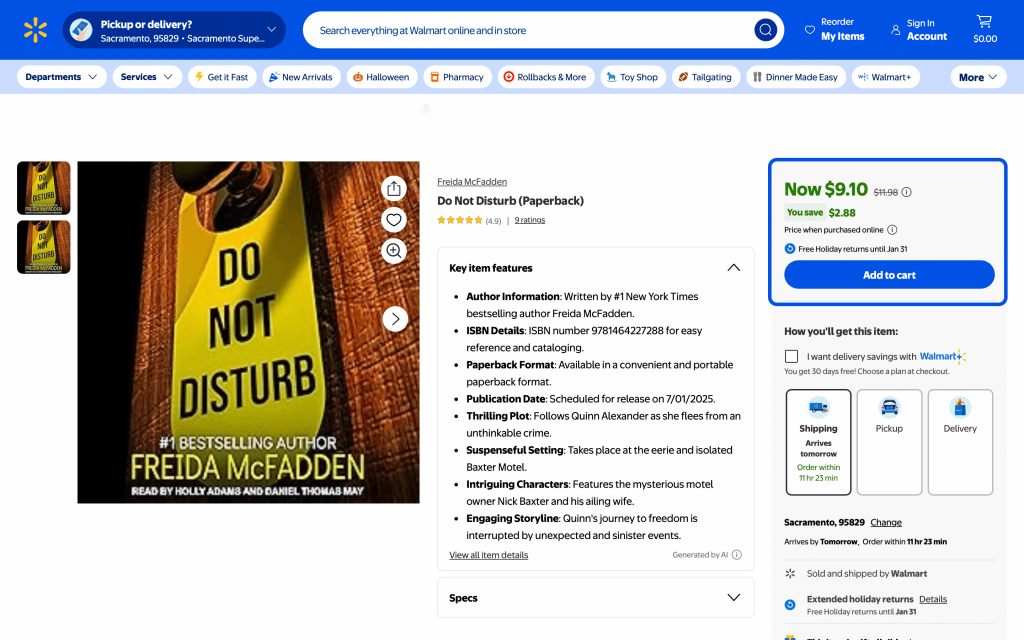
Walmart highlights products with strike-through pricing, promo flags, event-specific slots – and also allows coupons. These tools boost visibility but must be planned strategically. Promo mechanics are most effective on SKUs with high volume potential or strong customer reviews.
Tactics:
- Use the Promotion Center to set up strike-through discounts, limited-time deals, and coupons.
- Schedule flash sales on clearance or overstock items to move inventory.
- Align promos with Walmart’s event calendar (Holiday Savings, Summer Rollbacks).
- Track promo performance in the Growth Dashboard to see which deals convert.
Additional feature for M2E Cloud users: Utilize Price Modifications in M2E Selling Policies to adjust promotional prices automatically. For instance, you can reduce prices by 10% across a category during a holiday campaign without manually editing each SKU.


4. Use a Walmart Repricer wisely
Dynamic pricing is crucial at Walmart, where competition is intense. Walmart supports three repricer rules: External Price, Buy Box Price, and Competitive Price. These can help you stay ahead – but only if you set smart limits.
Tactics:
- External Price Rule matches key online competitors, such as Amazon or Target.
- Buy Box Rule optimizes for Buy Box share on high-volume SKUs.
- Competitive Price Rule aligns with Walmart marketplace averages.
- Always set minimum price floors to avoid margin losses.
- Blacklist SKUs where brand positioning matters (premium or MAP-restricted).


Additional feature for M2E Cloud users: M2E lets you define price sources and modifications:
- Pull prices directly from your store’s base catalog, or assign a Walmart-specific price attribute.
- Apply absolute or percentage adjustments (e.g., +5% above your Shopify price, -3% for clearance items).
- Use rounding rules so Walmart prices display cleanly at $9.99 or $19.95, which boosts conversion.
- Tie these rules into your Selling Policies to update automatically as stock, competition, or seasonality changes.
5. Focus on customer experience & reviews
Walmart Marketplace promotes sellers with an excellent customer experience. Positive reviews enhance search rankings, Buy Box opportunities, and conversions. Poor reviews or late shipments can quickly erode performance.
Tactics:
- Monitor reviews via the Customer Feedback Dashboard and respond to negative reviews promptly.
- Enroll in Walmart Fulfillment Services (WFS) for fast shipping and automatic 2-day tags.
- Provide easy returns to complement Walmart’s customer guarantee.
- Highlight 4★+ products in featured deals for best conversion rates.
- Utilize review trends to enhance product listings (e.g., update titles, refine descriptions).
- Track customer service metrics in Seller Scorecard to avoid penalties.
Choose your pricing strategy wisely
Every store is unique, and your pricing strategy should align with your goals. M2E Cloud lets you manage multiple approaches across marketplaces from a single dashboard.
- Hybrid approach. Keep entry SKUs low to attract buyers while maintaining premium lines for higher margins.
- Data-driven adjustments. Utilize inventory levels, sales trends, and competitor data to trigger automatic price adjustments.
- Custom rules per marketplace. Apply pricing rules, minimum floors, or dynamic modifications for each channel.
- Track performance. Dashboards show how your strategy affects sales, margins, and customer behavior.
With M2E Cloud, you can experiment, adapt, and optimize your pricing without juggling spreadsheets or multiple tools.
The Bottom Line
Winning on Walmart Marketplace comes down to striking a balance between competitive prices and seamless operations. From setting consistent EDLP pricing to leveraging repricing tools, promo mechanics, and customer experience, every decision shapes your visibility and sales.
M2E Cloud makes this easier. With its flexible Selling Policies, you can:
- Adjust prices based on your strategy (competitor tracking, seasonality, inventory levels).
- Enable multipacks to move stock faster or serve bulk buyers.
- Utilize price modifications and rounding to remain competitive while preserving margins.
- Keep your catalog clean and up-to-date with Walmart’s requirements.
- Sell across multiple marketplaces while maintaining different prices for each channel.
In the U.S., Amazon dominates and requires a competitive strategy, eBay is ideal for a gradual start, while Temu and TikTok Shop are rapidly expanding and gaining market share. M2E Cloud helps you manage these differences seamlessly, keeping your pricing aligned and optimized for every channel.
Instead of juggling manual updates or spreadsheets, you get one connected hub to manage Walmart listings, prices, and promotions at scale. The result: more Buy Box wins, stronger customer trust, and higher profits – without the operational headaches.
With M2E Cloud, Walmart pricing isn’t guesswork. It’s a strategy, backed by automation.


