

According to Forbes, the global beauty industry is set to grow at a compound annual rate of 5-7%, reaching or even surpassing $800 billion by 2025. And Amazon is right at the center of this boom.
Why do millions choose to buy beauty products on Amazon? Because it’s easy, fast, and, most importantly, trusted. For sellers, this means one thing: access to a massive audience that actively looks for skincare, makeup, and wellness products every day.
But with that opportunity comes responsibility. Amazon rewards sellers who meet its strict requirements with better rankings, visibility, and conversions. So if you want to thrive in this competitive marketplace, your listings, packaging, and compliance all need to be spot on.
Whether you’re launching a viral mascara or an all-natural face serum, this guide will walk you through the key steps, pitfalls to avoid, and smart strategies to help you succeed at selling beauty products on Amazon in 2025.
Which Beauty Categories Can You Sell on Amazon?
The Beauty & Personal Care department on Amazon is massive and continues to grow every year as consumers increasingly shop online for everyday essentials, luxury products, and trending beauty finds.
Here’s a breakdown of the key subcategories you can explore as a seller:
- Makeup. This is one of the most searched and competitive subcategories. It includes: foundation, concealer, primers, lipsticks, glosses, liners, eyeliners, mascaras, brow products, eyeshadows, palettes, blushes, bronzers, highlighters, setting sprays and makeup removers.
- Skin care. This is another top performer with loyal repeat buyers. It includes: facial moisturizers, serums, toners, mists, essences, cleansers, exfoliators, face masks and treatments, eye creams, anti-aging products, SPF and sun protection.
- Hair care. This includes products like shampoos, conditioners, hair oils, masks, and styling tools.
- Fragrance. This is related to perfumes, colognes, body sprays, and rollerballs. It’s a niche with high margins but may require hazmat clearance due to alcohol content.
- Foot, hand & nail care. This is about hand creams, foot masks, nail strengtheners, cuticle oils, and manicure kits. Nail polish and remover are considered hazmat, so plan for fulfillment restrictions accordingly.
- Tools & accessories. This covers makeup brushes, beauty blenders, facial rollers, gua sha tools, tweezers, mirrors, and storage organizers.
- Shave & hair removal. Includes razors, wax kits, depilatory creams, epilators, and aftershave. Success here depends on effectiveness, gentleness on skin, and smart positioning (men’s vs. women’s grooming, travel kits, etc.).
- Personal care. More of a crossover with health & wellness. This includes deodorants, body lotions, feminine hygiene, and oral care.
- Salon & spa equipment. Best for B2B or prosumer sellers. Includes facial steamers, massage tables, wax warmers, and LED light therapy devices.
Still, keep in mind that no matter which cosmetic brands you’re planning to sell on Amazon, you must have official authorization from the brand owner or manufacturer. Amazon strictly enforces brand protection policies, and selling branded beauty products without proper approval can result in listing removal or even account suspension. So, make sure you obtain the necessary resale rights or distribution agreements before listing any trademarked cosmetics, especially for popular or luxury brands.
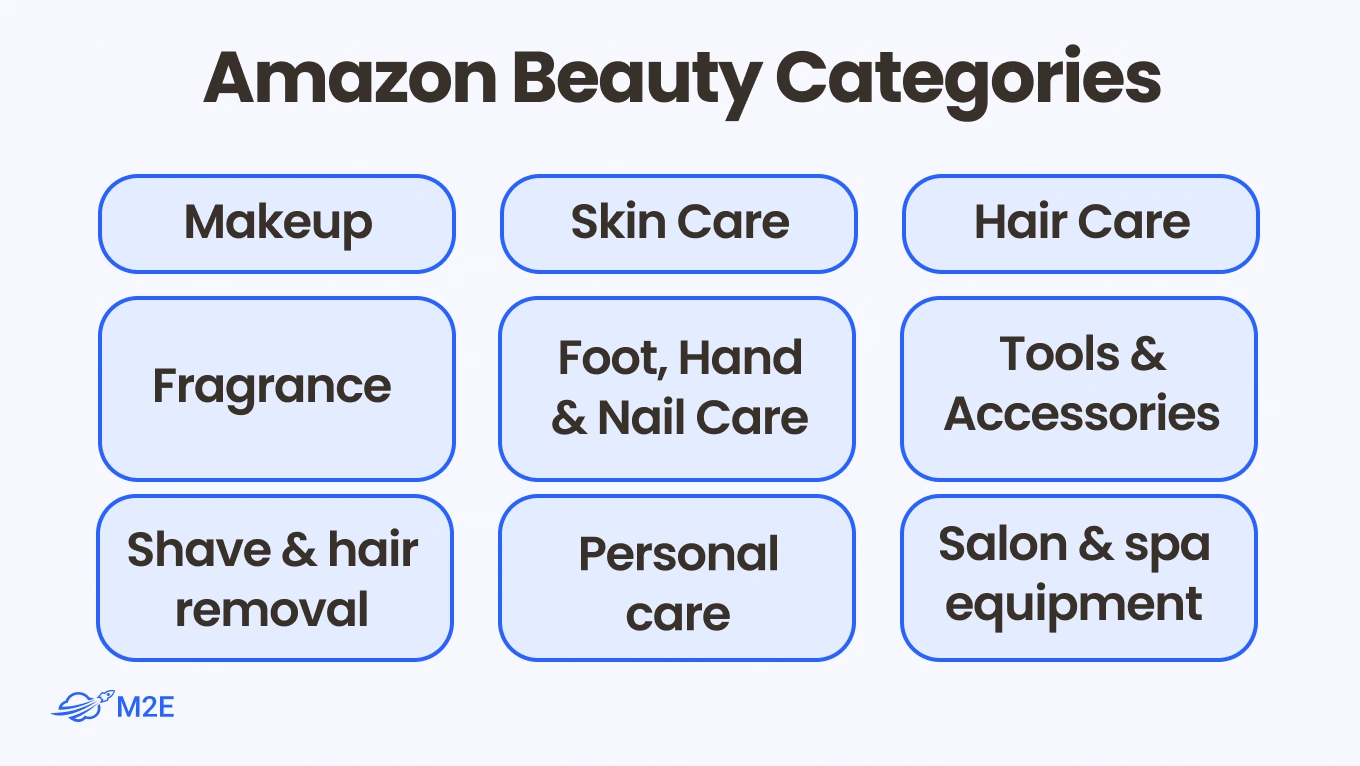
Of course, Amazon offers a wide range of beauty categories, each with its own specifics and selling strategies, but today, we’ll take a closer look at two of the most dynamic and competitive ones: Makeup and Skin Care.
Makeup: Eye-Catching Profits
Makeup is one of the top-performing segments in Amazon’s Beauty & Personal Care department and for good reason. From impulse buys to repeat essentials, shoppers are constantly searching for their favorite eyeliner, the perfect nude lipstick, or that viral setting spray they saw on TikTok.
With a low barrier to entry and strong demand, selling makeup on Amazon offers new and experienced sellers a highly profitable niche but only if you understand the market dynamics.
What Buyers Care About Most
Amazon makeup shoppers are visually driven and highly informed. They read reviews, check ingredients, and want to trust your brand. Here’s how to appeal to them:
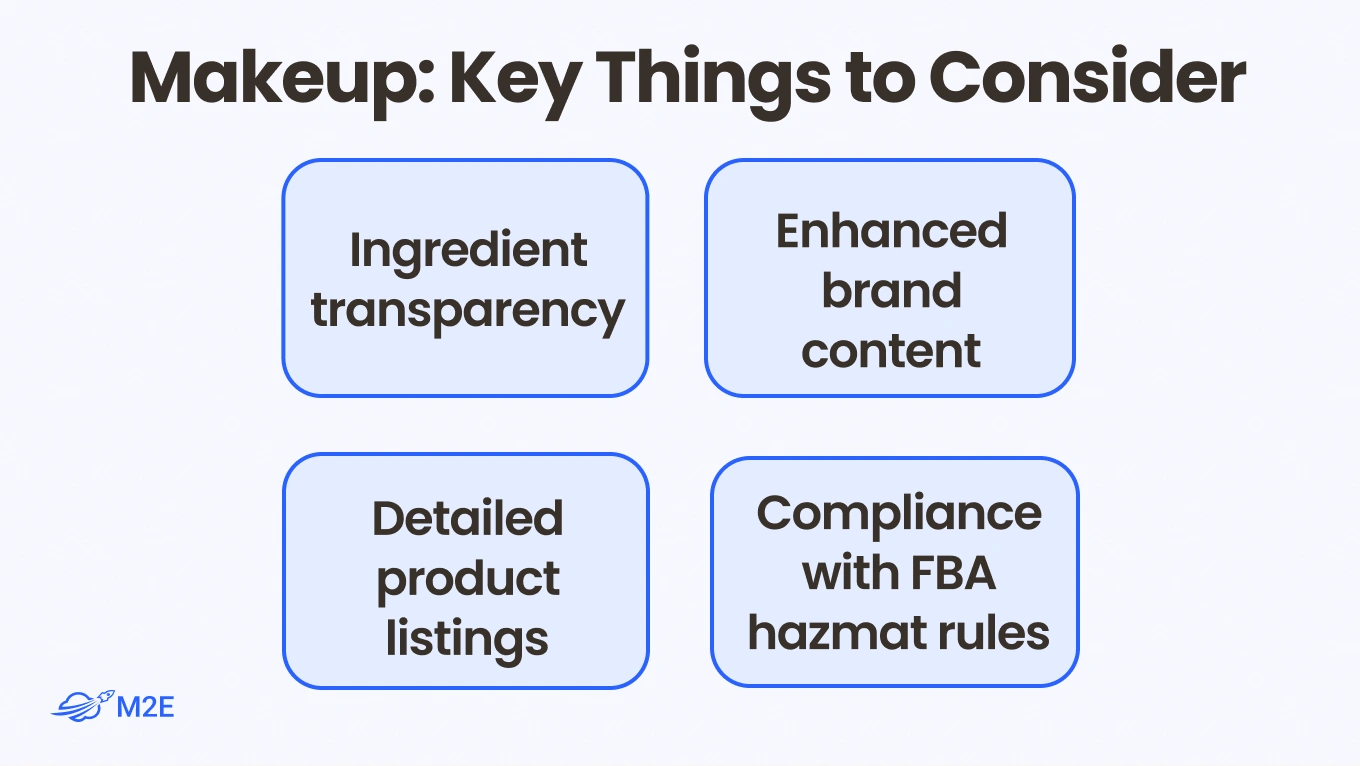
Detailed product listings. Use high-quality lifestyle and product photography, show close-up swatches on various skin tones, and list exact shade names. Color accuracy matters more than ever.
Ingredient transparency. Customers are moving toward clean beauty, looking for labels like:
- Paraben-free;
- Cruelty-free;
- Vegan;
- Fragrance-free (especially for sensitive skin);
List ingredients clearly in bullet points and highlight any unique selling points like natural oils, SPF, or skin-care benefits.
Enhanced brand content. If you’re brand-registered, use Amazon A+ Content to add comparison charts, visual storytelling, before-after examples, and trust-building badges (e.g. Leaping Bunny certified, dermatologist-tested).
Compliance with FBA hazmat rules. Many makeup products, especially sprays, mists, or alcohol-based removers, may be classified as hazardous materials by Amazon. These require:
- Special packaging and documentation;
- Enrollment in Amazon’s Dangerous Goods program;
- Potential limitations for FBA (you may have to use FBM or MCF);
Always double-check your product’s status using Amazon’s FBA Dangerous Goods Review Tool before shipping to a fulfillment center.
Key tips for makeup sellers:
- Create detailed product listings with clear shade names and swatch images.
- Provide ingredient transparency, customers appreciate clean labels and allergy-safe information.
- Use Amazon A+ Content to visually explain how your product stands out (vegan, cruelty-free, long-lasting, etc.).
- Stay on top of hazmat restrictions for sprays and alcohol-based products, these may require special approval through FBA.
Skin Care: Where Trust and Transparency Win
The skin care category on Amazon is booming and it’s not just about moisturizers and masks anymore. Shoppers are more informed than ever. They read labels, research active ingredients, and follow routines inspired by influencers, dermatologists, and TikTok trends.
To succeed in this space, your brand needs to be credible, clear, and compliant. Trust is everything in skin care.
Building Customer Confidence
To stand out and build a loyal following, focus on education and transparency:
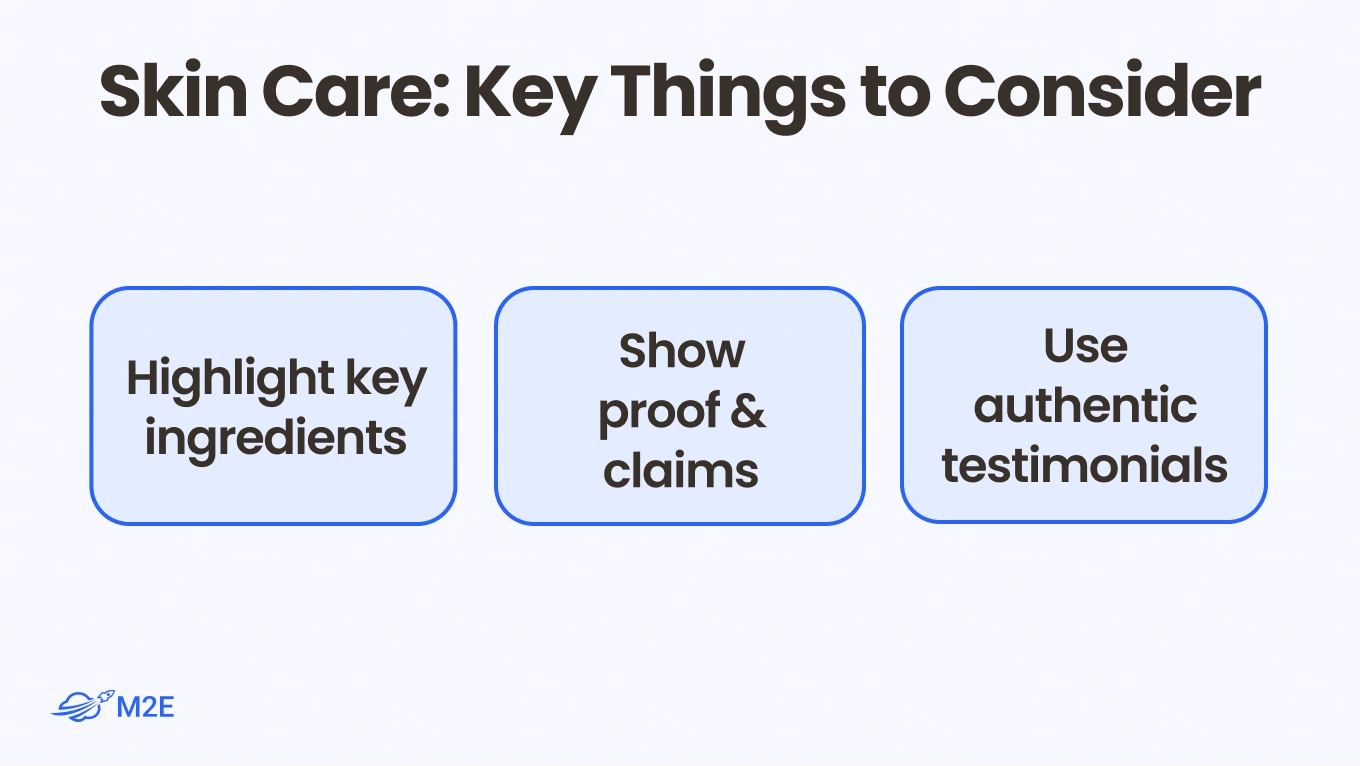
Highlight key ingredients. Don’t just list ingredients, explain their purpose. For example:
- “Contains 2% salicylic acid to help unclog pores and prevent breakouts”;
- “Infused with hyaluronic acid for deep hydration without greasiness”;
Ingredient callouts in bullet points, infographics, or A+ Content are highly effective.
Show proof & claims. If your product is:
- Dermatologist-tested;
- Fragrance-free;
- Hypoallergenic;
- Non-comedogenic;
— say it loudly and proudly. These details build immediate trust with cautious shoppers.
If you have clinical trial results, third-party certifications, or before-after imagery, incorporate them into A+ content or your product gallery.
Use authentic testimonials. Glowing reviews from real customers about reduced breakouts, improved texture, or soothed irritation will do more than any ad ever could.
Meanwhile, remember that you can sell on Amazon a lot of different products. Check out our guides to discover:
- How to Sell New Musical Instruments on Amazon
- How to Sell Books on Amazon
- How to Sell Plants on Amazon
- How To Sell Tea on Amazon
Inventory Management & Expiry Dates
When selling cosmetics, especially skincare, creams, serums, or anything with active ingredients, managing product freshness is critical.
Amazon has strict requirements for products with expiration dates. If an item is too close to its expiry (usually less than 90 to 120 days), it may be rejected at the FBA warehouse, blocked from listing, or marked as unfulfillable.
To avoid issues, you’ll need a reliable system for:
- Lot tracking to monitor production and expiration dates;
- FIFO inventory rotation to ensure older stock sells first;
- Automated alerts when products approach expiry;
Using tools like M2E Cloud can help streamline stock control across Amazon and other sales channels, ensuring compliance while maintaining customer trust.


Let’s find out more about what actually you can do with eCommerce Amazon integration by M2E Cloud.
For Shopify, WooCommerce, BigCommerce, Ecwid and Salesforce M2E Cloud’s Amazon integration offers a suite of features designed to streamline and enhance your e-commerce operations across multiple platforms:
- Quick product listing. Easily import your existing beauty listings or create new ones from scratch. The system helps you match your cosmetics to the right Amazon product types and categories with automatic suggestions, perfect for accurately listing serums, lipsticks, or foundation sets.
- Real-time inventory & pricing sync. Ensure your stock levels and prices are always up to date across Amazon and other connected platforms, preventing overselling popular skincare kits or underpricing limited-edition makeup.
- Centralized order management. View and manage all your Amazon orders and those from other platforms in one place. You’ll keep tracking details and fulfillment status updated for every beauty shipment.
- FBA-friendly workflow. Seamlessly integrate with Fulfillment by Amazon, including for beauty products that are FBA-eligible. You can also handle both FBA and self-fulfilled listings without disrupting your daily workflow.
- Automated repricing tool. Optimize your pricing dynamically to stay competitive and increase visibility in the Buy Box whether you’re selling premium serums or fast-moving beauty accessories.
- Performance analytics. Track which products are driving sales, which have low inventory, and what trends are emerging ideal for adapting to seasonal beauty demands or viral TikTok trends.
- Multichannel integrations. Connect Amazon to your other selling channels like TikTok Shop, Shopify, or BigCommerce. Manage everything from your lipstick bundles to facial rollers in one system and fulfill all orders using your Amazon FBA stock via MCF.
If you are selling with Shopify read about 7 Best Shopify Amazon Integration Apps.
Still if you are working with Magento (Adobe Commerce) to sell cosmetic products on Amazon keep on eye on the M2E Pro Magento Amazon extension.

FBA or FBM? How to Handle Fulfillment
Choosing the right fulfillment method is one of the most important decisions you’ll make as a beauty seller on Amazon. It affects not only your shipping speed and customer satisfaction, but also whether Amazon will even allow your product to be stocked in its warehouses.
Let’s break down the pros, cons, and requirements for each option, especially in the context of cosmetic products like makeup and skin care.
Fulfillment by Amazon (FBA)
FBA is the go-to choice for most successful beauty brands on Amazon and for good reason:
Key benefits:
- Prime eligibility, fast, trusted shipping boosts conversion rates;
- Amazon handles customer service and returns;
- Scales easily as your orders grow;
- Great for lightweight items like lipsticks, serums, or palettes;


Check out our blog to discover The 5 Best Amazon FBA Inventory Management Software.
Straightforward multi-channel Amazon FBA integration by M2E Cloud.
However, cosmetic products also come with unique considerations.
FBA challenges for cosmetics:
Hazmat restrictions. Liquids, sprays, and alcohol-based products (e.g., toners, mists, makeup removers) may be considered hazardous materials.
- These require special approval and safety documentation (like SDS sheets).
- Some may be blocked from FBA entirely and must be fulfilled via FBM or MCF.
- Always check with Amazon’s Dangerous Goods Review tool before sending stock.
Expiry date requirements. FBA warehouses won’t accept cosmetic items with short shelf life.
- Products must have at least 90–120 days before expiration at the time of arrival.
- You’ll need to provide clear labeling (batch/lot number + expiration date).
- For safety and quality, tamper-evident seals are highly recommended.
Packaging rules. Amazon expects all cosmetic items to be securely packaged and leak-proof. Use shrink wrap, polybags, and double seals where needed.
Meanwhile, remember to check out 2025 Amazon FBA & Referral Fee Updates.
Fulfilled by Merchant (FBM)
FBM means you store, pack, and ship the orders yourself (or through a 3PL provider).
When FBM makes sense:
- You sell products not approved for FBA (e.g., alcohol-based sprays, pressurized items);
- Your products have short shelf life or frequent formula changes;
- You want more control over packaging, inserts, and branding;
- You operate in low-volume or high-margin niches where speed is less critical;
Keep in mind:
- You’re responsible for shipping speed, customer support, and handling returns;
- Your listings may not be Prime-eligible, which can lower visibility and conversions;
- You’ll need strong systems in place for lot tracking and inventory rotation;
Fulfill Other Channels with MCF (Multi-Channel Fulfillment)
Want to sell on TikTok Shop, Shopify, or your own website, but still use your Amazon inventory? With Amazon MCF, you can:
- Fulfill non-Amazon orders from your FBA stock;
- Ship orders directly to TikTok Shop customers;
- Avoid duplicating inventory across multiple platforms;
Connect your store to Amazon MCF in minutes with M2E Cloud. Sync orders from Ecwid, WooCommerce, TikTok Shop, eBay, and more while Amazon takes care of fulfillment, so you can focus on growing your beauty brand.

Check out this quick guide to using Amazon MCF to fulfill TikTok Shop orders made easier with integration tools like M2E Cloud.
FAQ: FBA Hazmat Limitations for Cosmetic Products
Q1: What qualifies a cosmetic product as hazardous (Hazmat) on Amazon?
Certain liquids, creams, sprays, gels, and alcohol-based items may be classified as hazardous materials (Hazmat) due to their chemical composition or packaging. This includes:
- Makeup setting sprays;
- Toners with alcohol;
- Aerosol products (e.g., dry shampoo);
- Nail polish and remover;
- Some skincare treatments with essential oils or active ingredients;
Q2: Can I still sell hazmat products through FBA?
Yes, but only after approval. Amazon has a Dangerous Goods (Hazmat) program that allows sellers to store and ship eligible products through FBA if they meet safety, packaging, and labeling requirements.
Q3: How do I check if my cosmetic product is considered Hazmat?
Use Amazon’s FBA Dangerous Goods Identification Guide and Dangerous Goods Review Tool in Seller Central. You’ll typically need to submit:
- An MSDS or SDS (Material Safety Data Sheet);
- Product images showing packaging and warning labels;
- Additional compliance documentation depending on the substance;
Q4: What happens if I don’t provide the required hazmat documentation?
If you don’t submit the necessary documents, Amazon may:
- Block your listing;
- Reject FBA inbound shipments;
- Delay inventory check-in;
- Or automatically classify your product as “unfulfillable”;
Q5: What are the packaging and labeling requirements for hazmat cosmetics?
Products must:
- Be leak-proof and sealed (double-sealed is recommended);
- Include hazard labels if required;
- Show the expiration date and batch/lot number if applicable;
- Be packed according to Amazon’s prep and packaging rules for dangerous goods;
Conclusion: Glow Up Your Amazon Sales
Selling cosmetics on Amazon in 2025 is about more than just having a good-looking product. It requires staying compliant with beauty and hazmat rules, building trust through clear and informative listings, and managing fulfillment and inventory efficiently.
Success also comes from reaching your audience across multiple platforms, using tools like M2E Cloud to simplify multichannel selling. Whether you’re offering vegan lip balm, Korean skincare, or viral TikTok dupes, start with one strong product and scale with confidence your beauty brand is ready to shine.
Follow our blog for more eCommerce tips and valuable insights.


