Selling on Amazon in 2026 requires sharper oversight than ever. With rising fulfillment fees, advertising costs, and return-related expenses, operational costs continue to climb – putting pressure on already thin margins. Sellers can no longer rely on top-line revenue alone; clear insight into actual profit and performance is now essential.
In this article, we have compiled a list of the top 5 best Amazon analytics platforms for you and told you what to look for in 2026 when choosing the right tool.
The Amazon Reality in 2026: Evolving Costs, Smarter Decisions
Amazon has openly recognized that fulfillment costs are going up – FBA fees alone are set to increase by around 0.5% in 2026. To help sellers stay on top of their numbers, Amazon launched a new Profit Analytics dashboard focused on per-unit profitability. But even with that, hidden costs like returns, storage fees, and ads can quietly eat up 30% or more of a product’s price. Without clear, accurate analytics, it’s easy to make decisions based on partial data- and end up losing money without realizing it.
This environment makes advanced analytics critical. Sellers need to calculate their net profit per SKU – after all fees, ad costs and returns – not just raw sales. They must also trust analytics tools to flag emerging issues in real time (for example, sudden return spikes or ad inefficiencies) so they can act quickly. In short, knowing the true financial health of each product is vital: otherwise, like experienced sellers warn, you’ll be “flying blind” and “wondering where the money actually went”.
What to Look for in Amazon Analytics Tools in 2026
Since 2025, Amazon has tightened enforcement around product compliance, account health, and listing accuracy. Analytics tools that help monitor account health metrics, return rates, defect rates, and policy risks are now far more valuable. If a tool does not support operational risk monitoring, that is a critical limitation in 2026.
- Calculation of actual net profit. You can’t grow if you don’t know what actually makes money. The right tool should break down profit per SKU, factoring in every cost – COGS, Amazon fees, ads, shipping, refunds, and discounts. No guesswork, no inflated numbers.
- AI forecasting and analytics. Analytics shouldn’t just show what happened. With AI-driven insights, you can spot trends early, avoid stockouts, and prepare for seasonal shifts or margin drops before they hit.
- Advertising attribution clarity. It should be obvious what you’re getting from your ad spend. Look for tools that show ACoS, TACoS, ROI, and how ads affect your bottom line – not just clicks and impressions.
- Multi-channel support. Selling on multiple marketplaces is the norm. Your analytics platform should track performance across Amazon, Walmart, TikTok Shop, eBay, and others in one place, so you’re not stitching together numbers from different dashboards.
- Account health monitoring. Amazon’s rules are getting stricter, and one slip can put your account at risk. Tools that monitor return rates, shipping performance, and policy compliance help keep your business safe.
- Real-time data accuracy. Outdated data leads to bad decisions. Choose a tool that syncs in real time (or close to it), so you’re not acting on yesterday’s numbers.
Each of the above points makes analytics tools useful for sellers in 2026, as Amazon’s stricter requirements and multi-channel sales require deeper analysis and quick responses to changes. The sources cited confirm the importance of such features for modern businesses on Amazon.
Top 5 Amazon Analytics Tools in 2026
M2E Sales Analytics
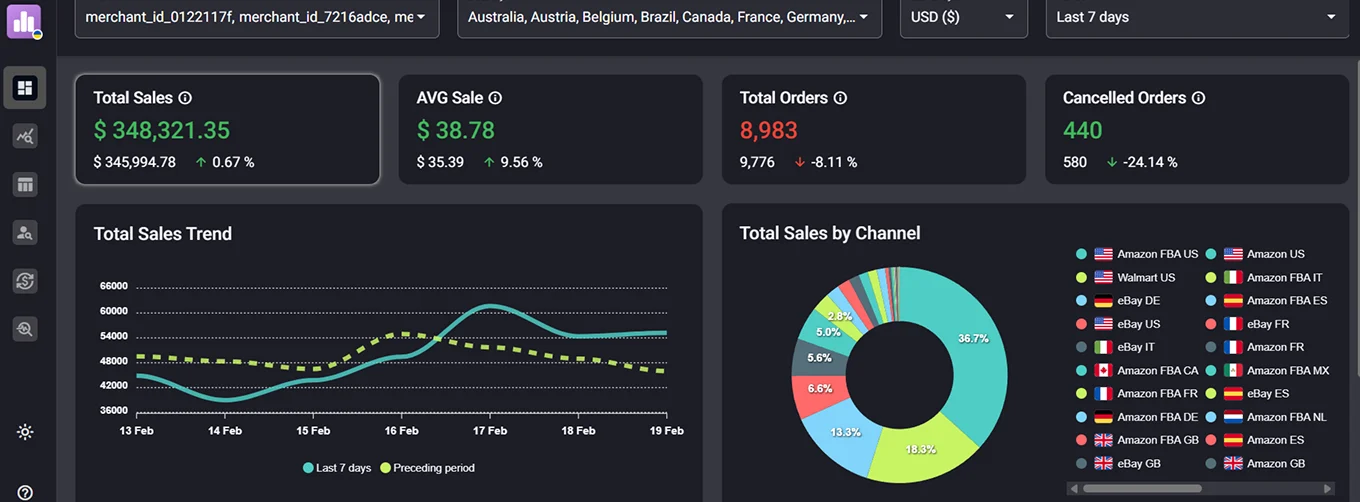
M2E Sales Analytics helps you stay on top of your numbers by showing exactly how your business performs across Amazon, eBay, Walmart, TikTok Shop and Temu. It calculates your real profit per product, factoring in all the actual fees, returns, and costs. The data updates daily and stays in sync with your sales, so you always have a current, accurate view – no spreadsheets, no guesswork.
Key Features and Benefits
- True Profitability Calculation. M2E calculates your net profit and gross margin automatically by factoring in sales revenue, shipping costs, marketplace fees, returns, and COGS. You’ll know exactly which products make money and which ones need attention.
- Channel & Marketplace Performance. View granular breakdowns like total sales, shipment costs, fees, promotions, taxes, and cancellations by channel. The “Sales Performance by Channel” table helps identify weak spots and high-performing regions or fulfillment models (FBA/FBM).
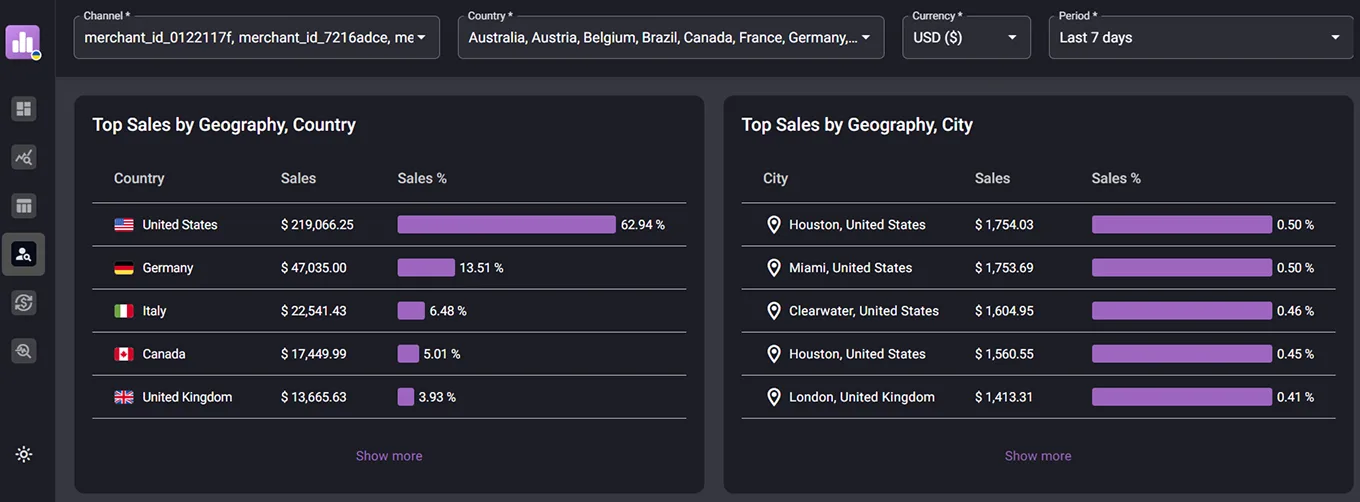
- Geographic and Channel Grouping. Group sales by country, marketplace, or even city to identify where you’re gaining traction and where to optimize. It’s all in one place – no need to cross-check multiple dashboards.
- Product & Customer Insights. Quickly spot your top-selling products, SKUs that aren’t pulling their weight, and items with high return rates. You can also track buyer behavior by region and timing, helping you adjust inventory, pricing, and campaigns more effectively.
- Mobile-Friendly Access. The analytics interface is fully responsive, enabling merchants to monitor performance and access data from any device.
- Real-Time Sync. All inventory, order, and pricing data is updated in near real time via M2E Cloud. KPI dashboards reflect current marketplace activity without delay.
Limitations
M2E Analytics focuses on profit and operational performance reporting. It does not include PPC analytics or ad attribution, AI forecasting, or built-in Amazon account health monitoring.
Pricing
M2E Analytics is free for all M2E Cloud and M2E Pro users – no extra fees or add-ons required. If you’re not using either platform and want access to Analytics as a standalone tool, you’ll need to contact support directly to discuss options.
Best Suited For
Amazon sellers who need a reliable view of true profit per SKU in 2026, including fees, refunds, and returns. Ideal for teams that want daily profit and performance visibility across products and fulfillment models (FBA and FBM), especially if they already use the M2E ecosystem. It also works well for sellers who run Amazon as their main channel and want the option to track additional marketplaces in the same dashboard as they expand.
SellerBoard
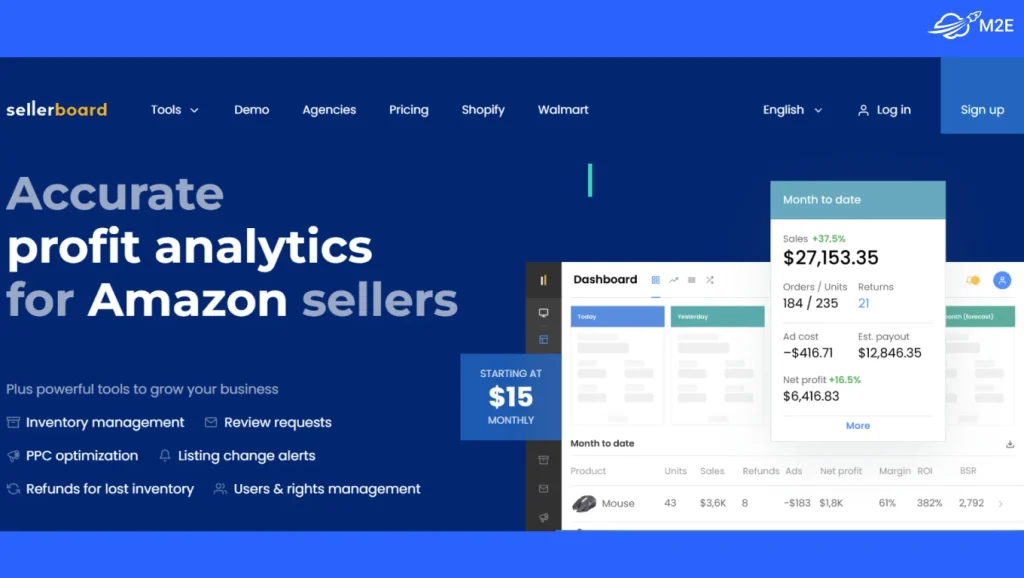
SellerBoard gives Amazon sellers a clear view of their actual profit by tracking all related costs – Amazon fees, refunds, ad spend, and product costs – down to each SKU. Beyond profit tracking, it includes tools for managing PPC campaigns, staying on top of inventory, and automating customer review requests.
Key Features and Benefits
- Real-Time Profit Analytics. Tracks profit at the SKU level by factoring in Amazon fees, shipping costs, COGS, PPC spend, refunds, and promotions.
- PPC Dashboard. Enables monitoring and evaluation of PPC campaigns, ad groups, and keywords to improve profitability.
- Inventory Forecasting. Alerts users when to reorder products based on stock levels, sales velocity, and lead times.
- Refunds and Fee Tracking. Automatically detects and reports reimbursements, returns, and hidden FBA fees.
- Email Automation. Built-in tool to send post-sale emails and review requests, compliant with Amazon messaging policies.
- Dashboards and Reports. Clean visualizations for orders, trends, losses, and product performance, exportable to CSV.
- Multichannel Expansion. In addition to Amazon, SellerBoard supports analytics for Shopify, Walmart, giving sellers basic multichannel visibility.
Limitations
While SellerBoard has basic support for platforms like Shopify, Walmart, and eBay, its main focus is still Amazon. It doesn’t include AI-powered forecasting or account health monitoring, and there’s no support for external ad attribution. The interface can also feel crowded if you’re not used to working with a lot of metrics. While Jungle Scout offers a solid Profit Overview feature, it may not capture every FBA-specific fee or reimbursement category in full detail. For sellers who need precise financial breakdowns – including less common fee types – many pair it with a dedicated profit tracking tool like SellerBoard.
Pricing
Starts at $15/month (billed annually) for up to 3,000 products. Higher plans go up to $63/month, depending on catalog size. A free 1-month trial gives you full access to test all features.
Best Suited For
Amazon sellers who need clear profit tracking and simple operational tools. Especially useful for those focused on keeping tight control over costs and margins.
JungleScout
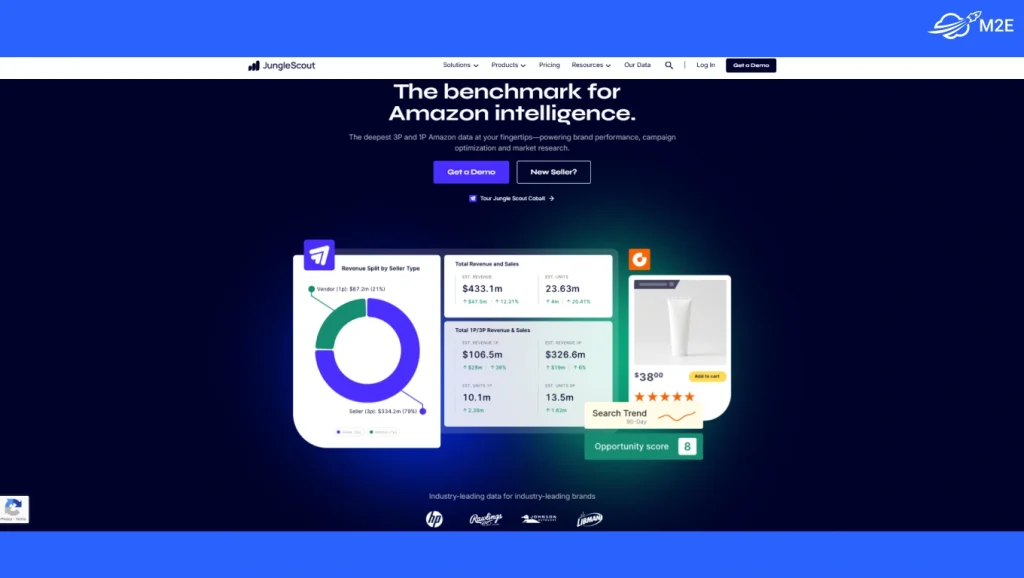
Jungle Scout gives Amazon sellers a complete toolkit to find products, write better listings, and track what’s working. While it started as a product research tool, it now includes features for profitability tracking, PPC analysis, supplier lookup, and AI-powered listing support – all in one place.
Key Features and Benefits
- Product Research Suite. Access a searchable database of over 500 million Amazon products. Filter by sales rank, revenue, price, and review count to validate new product ideas and niches.
- Sales Analytics. See your real profit and ROI in one place. Jungle Scout breaks down FBA/referral fees, COGS, PPC spend, and refunds to give you a clear view of SKU-level profitability.
- AI Assist. Let AI help with the heavy lifting. Get listing drafts, keyword ideas, and product suggestions based on real-time market trends – all generated automatically.
- Advertising Analytics. Integrates with Amazon PPC to track ad performance by campaign, product, or keyword. You can monitor ACoS, ROAS, and sales attributed to paid traffic.
- Supplier Database. Find verified global manufacturers by product type or ASIN and review import/export data.
- Listing Builder. Create SEO-optimized listings based on keyword rankings, search volume, and competition data.
- Keyword Scout. Jungle Scout’s keyword research tool allows sellers to identify high-converting keywords, reverse-search competitors, and build data-driven PPC strategies.
Limitations
Jungle Scout can feel overwhelming for new users due to the number of available tools. Users with large catalogs may experience delays in report syncing, despite claims of real-time updates. Advertising analytics and AI features are only available on higher-tier plans, which may limit usability for smaller sellers. Pricing can also be a barrier for those not needing the full suite.
Pricing
- Basic – $49/month (includes Chrome Extension and core research tools for 1 user)
- Suite – $69/month (adds keyword tools, listing builder, sales analytics, 2 seats)
- Professional – $129/month (adds historical data, 6 user seats, priority support)
Annual discounts are available. There’s no free trial, but a 7-day money-back guarantee is offered.
Best Suited For
Sellers using FBA or FBM who want reliable product research, help with listings, and clear profit insights. It’s a strong choice for early and mid-stage sellers who care about data and want to grow their catalog with confidence.
Helium10

Helium 10 is a good suite of Amazon and Walmart seller tools designed to support every stage of the selling journey – from product research and keyword optimization to operations, analytics, and compliance. With nearly 30 modules, the platform positions itself as an all-in-one workspace for private label and wholesale sellers. It’s especially popular among advanced sellers running multiple SKUs and ad campaigns.
Key Features and Benefits
- Product Research & Validation. Sellers can use tools like Black Box and Xray to evaluate product opportunities based on demand, competition, profitability, and seasonality. You can filter by marketplace, niche, and trend indicators to narrow down viable SKUs.
- Keyword Tracking & Optimization. Track keyword rankings daily, monitor competitors, and discover high-converting search terms. Cerebro and Magnet allow you to reverse-engineer competitor listings and find relevant keywords.
- Listing Builder with AI Suggestions. Build optimized product listings with real-time SEO scores. Helium 10 now includes AI-generated listing suggestions based on search trends and competitor benchmarks.
- Operations & Profitability Tools. Sellers can monitor sales, returns, and fees in the Profits dashboard. You can track net margin, ROI, and ad spend breakdowns per SKU. Inventory management tools also predict restock needs based on historical sales.
- Ad Management & Attribution. Manage and optimize Amazon PPC campaigns directly within the platform. Adtomic (Helium 10’s PPC suite) supports automated bidding, campaign suggestions, and keyword-level performance data.
- Marketplaces & Integrations. Supports Amazon and Walmart Integrates with Shopify via APIs and offers tools for Walmart keyword research and analytics. TikTok Shop support is limited to educational content and does not include listing or order management.
- Net Profit Calculation. Helium 10 Profits pulls in sales, estimated FBA/referral fees, shipping, COGS (product cost can be entered), and ad spend. It reports net profit margins and ROI for each product. You can compare product performance to identify winners/losers.
Limitations
Helium 10’s strength is also its complexity. With nearly 30 tools, the platform has a steep learning curve – especially for beginners. Many sellers report using only a small portion of the suite while still paying full price. The free plan is extremely limited and only includes a few product research features. Advertising tools are locked behind higher-tier plans. Users on the Platinum plan don’t get full access to Adtomic or advanced analytics. Despite its depth, syncing delays and data overload may slow down onboarding for smaller teams.
Pricing
Helium 10 operates on a subscription model. The Platinum plan starts at $129/month ($99/month if billed annually), and the Diamond plan is $359/month ($279 annual). Custom “Elite” tiers are available for large-scale operations. A limited free plan is available for product research, but core tools like profitability tracking and PPC management require a paid plan.
Best Suited For
Helium 10 works best for experienced Amazon sellers who manage large catalogs, run multiple ad campaigns, or operate across several brands. It’s a solid choice if you need deep insights, strong SEO tools, and advanced PPC features – all in one place. Just keep in mind: to get the most out of it, you’ll need the time (and budget) to fully use its many tools.
ManageByStats (MBS)
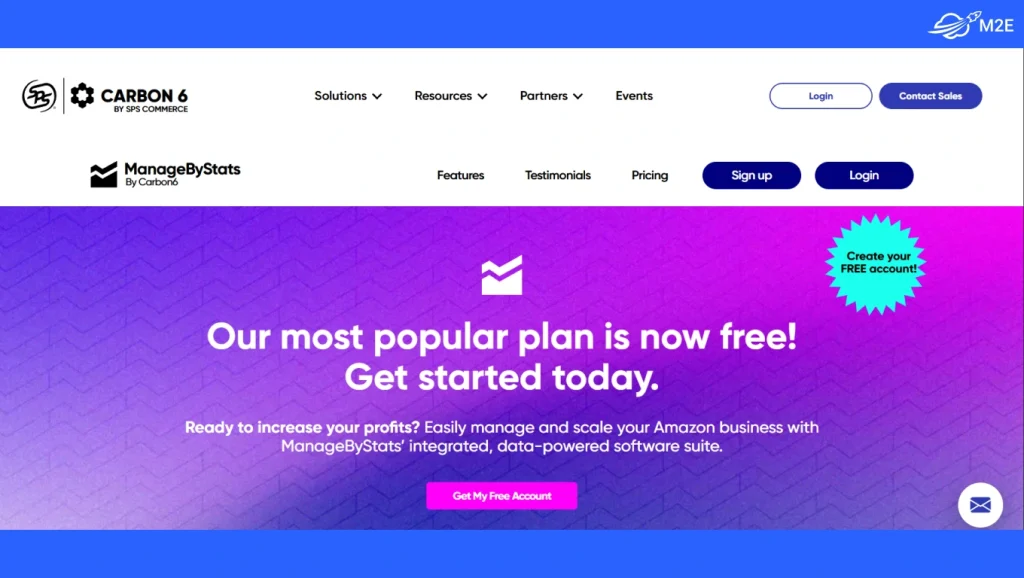
ManageByStats is a performance analytics and operations suite for Amazon sellers, now part of the Carbon6 ecosystem. It helps sellers consolidate product data, monitor KPIs, and streamline daily management. MBS provides detailed financial reports, order tracking, customer data, and advertising metrics in one interface.
The tool is designed primarily for established sellers who want operational clarity over their Amazon business without juggling multiple tabs or exports. Core features are organized into modules such as Stats, Customers, Ads, and Profits.
Key Features and Benefits
- Financial Dashboards. Track profits, sales trends, refunds, fees, and cost breakdowns at the product and account levels. Sellers can set default COGS, monitor ROI per SKU, and view historical data for forecasting and planning.
- Customer Management. Access customer purchase history, feedback, and contact records. You can filter by product, geography, or repeat behavior to refine outreach.
- Advertising Insights. The Ads module tracks PPC spend, ACoS, and campaign performance. Unlike basic reports in Seller Central, MBS consolidates metrics across SKUs and campaigns for faster evaluation.
- Automated Email Sequences. Use preset or custom templates to trigger post-purchase emails, feedback requests, and follow-ups – aligned with Amazon’s messaging policies.
- Inventory Management. MBS helps sellers forecast restocks, set reorder alerts, and manage FBA/FBM inventory from a single view.
- Multi-Account Support. Agencies and large-scale sellers can monitor multiple brands or stores in one interface, without logging into separate dashboards.
Limitations
MBS has not fully modernized its interface – the dashboard feels dated, and some users report that navigation is less intuitive than in newer platforms. The platform contains many overlapping modules, and some sellers may pay for features they don’t use or get nudged toward additional Carbon6 apps. AI features are absent; forecasting, anomaly detection, or predictive alerts are not included. Data refreshes daily via Amazon reports, meaning KPIs are not real-time. If your business relies on same-day pivots, this can be a bottleneck.
Pricing
ManageByStats offers tiered pricing based on the selected modules. There is no public flat-rate pricing listed; users are encouraged to request a demo or sign up for a Carbon6 account. Modules such as Ads, Email Automation, and additional users come at an extra cost. There’s also the option to bundle MBS with other Carbon6 tools like SellerTools or PixelMe for an integrated experience.
Best Suited For
MBS works best for growing or mid-sized Amazon sellers who want all performance and customer data centralized in one place. It’s especially useful for teams managing ads, reviews, and inventory, and for those who value structured reporting over AI-heavy automation.
Feature Comparison at Glance
| Platform | True SKU-Level Profit Tracking | Account Health Monitoring | Inventory Forecasting | PPC & Ad Metrics | Catalog Size Suitability | Pricing |
| M2E Analytics | Yes – includes fees, COGS, returns, FBA/FBM | Not included | No | Not supported | Top SKUs, growing to large catalogs, geo, and customer data | Free with M2E plans |
| SellerBoard | Yes – detailed Amazon fee breakdown | No | Yes | Yes – built-in PPC dashboard | Small to mid-size catalogs | From $15/mo |
| Jungle Scout | Basic profit tracking | Yes | Yes | Yes – ad analytics included | Small to mid-size, product-focused sellers | From $49/mo |
| Helium10 | Yes – profit + ROI per SKU | Partial (alerts & monitoring tools) | Yes | Yes – Atomic Suite | Mid-size to large catalogs | From $129/mo |
| ManageByStats | Yes – profit & ROI tracking | No | Basic | Yes – campaign-level | Mid-size catalogs | Custom pricing |
Wrapping It Up
Rising fees, tighter margins, and more moving parts across fulfillment, ads, and compliance mean that analytics isn’t just a growth tool – it’s a safeguard. Sellers need to see true profit per SKU, not just top-line revenue. They need alerts for hidden costs, visibility across every channel they sell on, and insights they can act on without delay.
The right tool depends on your business model:
- M2E Analytics – Best for Amazon sellers who need a clear, daily view of true profit per SKU, with all fees, refunds, returns, and fulfillment costs included. Especially useful for teams managing both FBA and FBM and looking to monitor performance without manual spreadsheets. If you’re already using M2E Cloud, the integration is seamless. And if Amazon is your core channel, M2E gives you the flexibility to expand to Walmart, eBay, or TikTok Shop using the same analytics environment – no need to onboard a new system as you grow.
- SellerBoard – Tailored for Amazon-only sellers who want detailed SKU-level profit tracking. It’s ideal for those focused on tight margin control, PPC performance, and catching hidden costs like returns and FBA fees fast.
- Jungle Scout – Best for catalog builders who rely on market research. If your growth depends on finding the right products, optimizing listings, and using AI for smarter launches, this is the tool to scale with.
- Helium 10 – Designed for high-volume sellers or agencies managing complex portfolios. It delivers advanced SEO, advertising automation, and listing compliance tools – but you’ll need the time (and budget) to fully use its deep stack.
- ManageByStats (MBS) – Suited for Amazon sellers who want unified account-level data, CRM visibility, and campaign analytics in one place. MBS is most useful for sellers who prioritize long-term customer management and need flexible reporting without complex tool-switching.
Whether you prioritize multichannel operations, AI-powered insights, or tight profit monitoring, the best tool is the one that delivers clarity without bloat – and helps you protect every dollar of margin.